Buy datawarehouse.eu ?
We are moving the project
datawarehouse.eu .
Are you interested in purchasing the domain
datawarehouse.eu ?
domain@kv-gmbh.de · 0541-91531010
Buy datawarehouse.eu ?
What are harmonic oscillations?
Harmonic oscillations are repetitive back-and-forth movements or vibrations that follow a specific pattern. They are characterized by a sinusoidal or wave-like motion, where the displacement of the oscillating object from its equilibrium position is proportional to the restoring force acting on it. Examples of harmonic oscillations include the swinging of a pendulum, the motion of a mass-spring system, and the vibrations of a guitar string. These oscillations are important in many areas of physics and engineering, as they can be used to describe and analyze various natural and mechanical systems. **
What are resonance-driven oscillations?
Resonance-driven oscillations occur when a system is subjected to an external force at its natural frequency, causing it to oscillate with increasing amplitude. This phenomenon is known as resonance, where the energy of the external force is transferred efficiently to the system, leading to large oscillations. Resonance-driven oscillations can be observed in various systems, such as mechanical, electrical, and acoustic systems, and are important in understanding the behavior of these systems under different conditions. **

Similar search terms for Oscillations
Top-Angebote
Products related to Oscillations:
-
United Charger & Smartwatch Data Cable Replacement Charger & Smartwatch Data Cable ReplacementKeep your Garmin 920XT charger ready whenever adventure calls. Designed for athletes, runners, and fitness enthusiasts, this replacement charger ensures your Forerunner 920XT stays powered and connected. Its durable smartwatch charging cable offers...39,97 $*Shipping: 0,00 $Secure redirect to the provider
-
Uplifted Finds Cartoon Big Eye Hub And High Fidelity Canine Engagement Architecture blueCommand ultimate petownership confidence with this Cartoon Big Eye Ball Dog Toy, a stabilization solution specifically engineered to act as a comprehensive tool for elite organization and superior technical ergonomics. Built with a robust reinforced...39,97 $*Shipping: 0,00 $Secure redirect to the provider
-
Salon Care Microwavable Heat Processing CapSalon Care Microwavable Heat Processing Cap just needs to be heated in the microwave, no cord, no fuss! The filling is 100% flaxseed and will hold heat for up to 30 minutes. The cap is reusable time and time again. Use with any hair treatment that...21,99 $*Shipping: 0,00 $Secure redirect to the provider
-
Oliphant Cloud StorageThe Oliphant Cloud Storage is a cool and quirky way of storing an array of personal items. This space-saving organiser is not only a fun interiors item but it is also highly practical. Perfect for holding your phone, keys, receipts and coins, the product is designed to look like a cloud and features several sections of varying sizes, whilst the hidden compartment that's built into the base is ideal for storing important documents such as your passport or event tickets. Durable wood construction Hidden compartment ideal for important documents Incorporates different sized sections22,49 £*Shipping: 3,50 £Secure redirect to the provider




-
How do damped oscillations work?
Damped oscillations occur when an external force or frictional resistance acts upon a vibrating system, causing the amplitude of the oscillations to decrease over time. This damping effect gradually reduces the energy of the system, resulting in the oscillations eventually coming to a stop. The rate at which the oscillations decay is determined by the damping coefficient, with higher damping leading to faster decay. Damped oscillations are commonly observed in various systems, such as springs and pendulums, where energy is gradually dissipated due to external factors. **
-
How do you draw oscillations?
To draw oscillations, you can start by plotting a sinusoidal function on a graph. The function can be in the form of y = A*sin(Bx + C) or y = A*cos(Bx + C), where A is the amplitude, B is the frequency, and C is the phase shift. You can then plot the points on the graph by plugging in different values of x to see how the function oscillates. Additionally, you can use a ruler to connect the points to create a smooth oscillation curve. **
-
How can sinusoidal oscillations be modeled?
Sinusoidal oscillations can be modeled using mathematical equations that describe the amplitude, frequency, and phase of the oscillation. The most common way to model sinusoidal oscillations is through a sine or cosine function, such as y = A*sin(2πft + φ), where A is the amplitude, f is the frequency, t is the time, and φ is the phase shift. By adjusting these parameters, we can accurately represent the behavior of sinusoidal oscillations in various systems and phenomena. Additionally, sinusoidal oscillations can also be modeled using differential equations in the context of dynamic systems analysis. **
-
What are examples of damped oscillations?
Examples of damped oscillations include a swinging pendulum in a viscous fluid, a car's suspension system responding to bumps on the road, and the motion of a spring-mass system with air resistance. In each case, the oscillations gradually decrease in amplitude over time due to the dissipative forces present, such as friction or air resistance. The damping effect causes the system to eventually come to rest at its equilibrium position. **


What are the trigonometric functions in oscillations?
In oscillations, the trigonometric functions commonly used are sine and cosine functions. These functions describe the relationship between the angle of rotation and the position of an object undergoing oscillatory motion. The sine function represents the vertical component of the motion, while the cosine function represents the horizontal component. By using these trigonometric functions, we can analyze and predict the behavior of oscillatory systems. **
Does a wave consist of multiple oscillations?
Yes, a wave consists of multiple oscillations. In physics, a wave is a disturbance that travels through a medium, transferring energy without transferring matter. This disturbance causes particles in the medium to oscillate back and forth, creating a pattern of repeated motion. Therefore, a wave is made up of multiple oscillations as it propagates through the medium. **
Top-Angebote
Products related to Oscillations:
-
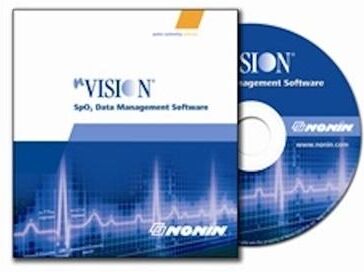
Nonin Medical nVision Data Management Software for Oximetry Screening""" nVision SpO2 Data Management Software Nonin's innovation in pulse oximetry has led to the development of an easy oximetry reporting solution nVISION. Designed to provide effortless viewing, professional analysis, report generation and reliable..."441,00 $*Shipping: 0,00 $Secure redirect to the provider
-
Harvard Business Review Press Harvard Business Review HBR’s 10 Must Reads 5 Book Collection Set – Essential Business, Leadership & Management GuidesHBR's 10 Must Reads 5 Books Collection Set Description On Emotional Intelligence If you read nothing else on emotional intelligence; read these 10 articles by experts in the field. We euro; ve combed through hundreds of articles in the Harvard Business Review archive and selected the most important ones to help you boost your emotional skills euro; and your professional success. Mental Toughness If you read nothing else on mental toughness; read these ten articles by experts in the field. We've combed through hundreds of articles in the Harvard Business Review archive and selected the most important ones to help you build your emotional strength and resilience--and to achieve high performance. The Essentials Change is the one constant in business; and we must adapt or face obsolescence. Yet certain challenges never go away. That's what makes this book 'must read.' These are the 10 seminal articles by management's most influential experts; on topics of perennial concern to ambitious managers and leaders hungry for inspiration--and ready to run with big ideas to accelerate their own and their companies' success. Change Management If you read nothing else on change management; read these 10 articles (featuring 'Leading Change; euro; by John P. Kotter). We've combed through hundreds of Harvard Business Review articles and selected the most important ones to help you spearhead change in your organization. Strategy If you read nothing else on strategy; read these 10 articles (featuring 'What Is Strategy? euro; by Michael E. Porter). We've combed through hundreds of Harvard Business Review articles and selected the most important ones to help you catalyze your organization's strategy development and execution.37,98 £*Shipping: 0,00 £Secure redirect to the provider
-
United Charger & Smartwatch Data Cable Replacement Charger & Smartwatch Data Cable ReplacementKeep your Garmin 920XT charger ready whenever adventure calls. Designed for athletes, runners, and fitness enthusiasts, this replacement charger ensures your Forerunner 920XT stays powered and connected. Its durable smartwatch charging cable offers...39,97 $*Shipping: 0,00 $Secure redirect to the provider
-
Uplifted Finds Cartoon Big Eye Hub And High Fidelity Canine Engagement Architecture blueCommand ultimate petownership confidence with this Cartoon Big Eye Ball Dog Toy, a stabilization solution specifically engineered to act as a comprehensive tool for elite organization and superior technical ergonomics. Built with a robust reinforced...39,97 $*Shipping: 0,00 $Secure redirect to the provider
-
What are harmonic oscillations?
Harmonic oscillations are repetitive back-and-forth movements or vibrations that follow a specific pattern. They are characterized by a sinusoidal or wave-like motion, where the displacement of the oscillating object from its equilibrium position is proportional to the restoring force acting on it. Examples of harmonic oscillations include the swinging of a pendulum, the motion of a mass-spring system, and the vibrations of a guitar string. These oscillations are important in many areas of physics and engineering, as they can be used to describe and analyze various natural and mechanical systems. **
-
What are resonance-driven oscillations?
Resonance-driven oscillations occur when a system is subjected to an external force at its natural frequency, causing it to oscillate with increasing amplitude. This phenomenon is known as resonance, where the energy of the external force is transferred efficiently to the system, leading to large oscillations. Resonance-driven oscillations can be observed in various systems, such as mechanical, electrical, and acoustic systems, and are important in understanding the behavior of these systems under different conditions. **
-
How do damped oscillations work?
Damped oscillations occur when an external force or frictional resistance acts upon a vibrating system, causing the amplitude of the oscillations to decrease over time. This damping effect gradually reduces the energy of the system, resulting in the oscillations eventually coming to a stop. The rate at which the oscillations decay is determined by the damping coefficient, with higher damping leading to faster decay. Damped oscillations are commonly observed in various systems, such as springs and pendulums, where energy is gradually dissipated due to external factors. **
-
How do you draw oscillations?
To draw oscillations, you can start by plotting a sinusoidal function on a graph. The function can be in the form of y = A*sin(Bx + C) or y = A*cos(Bx + C), where A is the amplitude, B is the frequency, and C is the phase shift. You can then plot the points on the graph by plugging in different values of x to see how the function oscillates. Additionally, you can use a ruler to connect the points to create a smooth oscillation curve. **
Similar search terms for Oscillations
-
Salon Care Microwavable Heat Processing CapSalon Care Microwavable Heat Processing Cap just needs to be heated in the microwave, no cord, no fuss! The filling is 100% flaxseed and will hold heat for up to 30 minutes. The cap is reusable time and time again. Use with any hair treatment that...21,99 $*Shipping: 0,00 $Secure redirect to the provider
-
Oliphant Cloud StorageThe Oliphant Cloud Storage is a cool and quirky way of storing an array of personal items. This space-saving organiser is not only a fun interiors item but it is also highly practical. Perfect for holding your phone, keys, receipts and coins, the product is designed to look like a cloud and features several sections of varying sizes, whilst the hidden compartment that's built into the base is ideal for storing important documents such as your passport or event tickets. Durable wood construction Hidden compartment ideal for important documents Incorporates different sized sections22,49 £*Shipping: 3,50 £Secure redirect to the provider
-
Telepassa Metal Heavy Duty Adjustable Garage Shelves Industrial Storage Unit for Warehouse【Massive Heavy-Duty Construction】: Tackle the heaviest storage challenges with this extra-wide steel storage rack. Formed from heavy-gauge cold-rolled steel with seamless, welded uprights, it delivers extreme stability.351,49 $*Shipping: 0,00 $Secure redirect to the provider
-
Uplifted Finds Cartoon Big Eye Hub And High Fidelity Canine Engagement Architecture yellowCommand ultimate petownership confidence with this Cartoon Big Eye Ball Dog Toy, a stabilization solution specifically engineered to act as a comprehensive tool for elite organization and superior technical ergonomics. Built with a robust reinforced...39,97 $*Shipping: 0,00 $Secure redirect to the provider
-
How can sinusoidal oscillations be modeled?
Sinusoidal oscillations can be modeled using mathematical equations that describe the amplitude, frequency, and phase of the oscillation. The most common way to model sinusoidal oscillations is through a sine or cosine function, such as y = A*sin(2πft + φ), where A is the amplitude, f is the frequency, t is the time, and φ is the phase shift. By adjusting these parameters, we can accurately represent the behavior of sinusoidal oscillations in various systems and phenomena. Additionally, sinusoidal oscillations can also be modeled using differential equations in the context of dynamic systems analysis. **
-
What are examples of damped oscillations?
Examples of damped oscillations include a swinging pendulum in a viscous fluid, a car's suspension system responding to bumps on the road, and the motion of a spring-mass system with air resistance. In each case, the oscillations gradually decrease in amplitude over time due to the dissipative forces present, such as friction or air resistance. The damping effect causes the system to eventually come to rest at its equilibrium position. **
-
What are the trigonometric functions in oscillations?
In oscillations, the trigonometric functions commonly used are sine and cosine functions. These functions describe the relationship between the angle of rotation and the position of an object undergoing oscillatory motion. The sine function represents the vertical component of the motion, while the cosine function represents the horizontal component. By using these trigonometric functions, we can analyze and predict the behavior of oscillatory systems. **
-
Does a wave consist of multiple oscillations?
Yes, a wave consists of multiple oscillations. In physics, a wave is a disturbance that travels through a medium, transferring energy without transferring matter. This disturbance causes particles in the medium to oscillate back and forth, creating a pattern of repeated motion. Therefore, a wave is made up of multiple oscillations as it propagates through the medium. **
* All prices are inclusive of VAT and, if applicable, plus shipping costs. The offer information is based on the details provided by the respective shop and is updated through automated processes. Real-time updates do not occur, so deviations can occur in individual cases. ** Note: Parts of this content were created by AI.