Buy datawarehouse.eu ?
We are moving the project
datawarehouse.eu .
Are you interested in purchasing the domain
datawarehouse.eu ?
domain@kv-gmbh.de · 0541-91531010
Buy datawarehouse.eu ?
What are reactants and products?
Reactants are the starting materials in a chemical reaction that undergo a change to form new substances called products. Reactants are consumed during the reaction, while products are the end result of the reaction. The reactants are typically written on the left side of a chemical equation, while the products are written on the right side. **
What are limiting reactants in chemistry?
Limiting reactants, also known as limiting reagents, are the reactants in a chemical reaction that are completely consumed, thus limiting the amount of product that can be formed. In other words, they determine the maximum amount of product that can be produced in a reaction. The concept of limiting reactants is important in stoichiometry, as it helps to determine the theoretical yield of a reaction and identify the excess reactant that will be left over after the reaction is complete. **
Similar search terms for Reactants
Top-Angebote
Products related to Reactants:
-
Uplifted Finds Cartoon Big Eye Hub And High Fidelity Canine Engagement Architecture pinkCommand ultimate petownership confidence with this Cartoon Big Eye Ball Dog Toy, a stabilization solution specifically engineered to act as a comprehensive tool for elite organization and superior technical ergonomics. Built with a robust reinforced...39,97 $*Shipping: 0,00 $Secure redirect to the provider
-
Salon Care Microwavable Heat Processing CapSalon Care Microwavable Heat Processing Cap just needs to be heated in the microwave, no cord, no fuss! The filling is 100% flaxseed and will hold heat for up to 30 minutes. The cap is reusable time and time again. Use with any hair treatment that...21,99 $*Shipping: 0,00 $Secure redirect to the provider
-
United Charger & Smartwatch Data Cable Replacement Charger & Smartwatch Data Cable ReplacementKeep your Garmin 920XT charger ready whenever adventure calls. Designed for athletes, runners, and fitness enthusiasts, this replacement charger ensures your Forerunner 920XT stays powered and connected. Its durable smartwatch charging cable offers...39,97 $*Shipping: 0,00 $Secure redirect to the provider
-
Oliphant Cloud StorageThe Oliphant Cloud Storage is a cool and quirky way of storing an array of personal items. This space-saving organiser is not only a fun interiors item but it is also highly practical. Perfect for holding your phone, keys, receipts and coins, the product is designed to look like a cloud and features several sections of varying sizes, whilst the hidden compartment that's built into the base is ideal for storing important documents such as your passport or event tickets. Durable wood construction Hidden compartment ideal for important documents Incorporates different sized sections22,49 £*Shipping: 3,50 £Secure redirect to the provider




-
How do you calculate reactants in chemistry?
To calculate reactants in chemistry, you first need to write a balanced chemical equation for the reaction. Then, determine the molar ratio between the reactants and the product in the balanced equation. Next, calculate the number of moles of the known reactant using its given mass or volume and its molar mass. Finally, use the molar ratio to calculate the number of moles of the other reactant needed for the reaction. **
-
Are only reactants given in redox reactions?
No, redox reactions involve both reactants and products. In a redox reaction, one substance undergoes oxidation (loses electrons) while another undergoes reduction (gains electrons). Therefore, both the reactants and products are involved in the redox process. The reactants are the starting materials that undergo the redox reaction, while the products are the resulting substances after the redox reaction has occurred. **
-
How do you calculate the reactants in chemistry?
To calculate the reactants in a chemical reaction, you first need to write out the balanced chemical equation for the reaction. Then, you can use stoichiometry to calculate the amount of reactants needed based on the desired amount of product. This involves using the coefficients in the balanced equation to set up conversion factors and then using these conversion factors to calculate the amount of reactants required. Finally, you can use the molar mass of the reactants to convert between mass and moles if necessary. **
-
What are the products and what are the reactants?
In a chemical reaction, the reactants are the substances that undergo a chemical change to form new substances called products. Reactants are the starting materials that are transformed into products during the reaction. The products are the end result of the chemical reaction, formed from the rearrangement of atoms in the reactants. The reactants are consumed during the reaction, while the products are the new substances that are produced. **

How do you calculate the required amount of reactants?
To calculate the required amount of reactants, you first need to determine the balanced chemical equation for the reaction. Then, you can use stoichiometry to convert the given amount of one reactant to the amount of the other reactant needed for the reaction. This involves using the molar ratios from the balanced equation to convert between moles of the given reactant and moles of the required reactant. Finally, you can use the molar mass of the required reactant to convert from moles to the required amount in grams or other units as needed. **
Why do the reactants not disappear in chemical reactions?
The reactants do not disappear in chemical reactions because of the law of conservation of mass, which states that matter cannot be created or destroyed in a chemical reaction. Instead, the reactant molecules are rearranged and their bonds are broken and formed to produce new products. This means that the total mass of the reactants is conserved and is equal to the total mass of the products. Therefore, the reactants do not disappear, but rather undergo a transformation into new substances. **
Top-Angebote
Products related to Reactants:
-
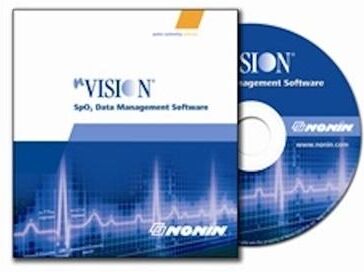
Nonin Medical nVision Data Management Software for Oximetry Screening""" nVision SpO2 Data Management Software Nonin's innovation in pulse oximetry has led to the development of an easy oximetry reporting solution nVISION. Designed to provide effortless viewing, professional analysis, report generation and reliable..."441,00 $*Shipping: 0,00 $Secure redirect to the provider
-
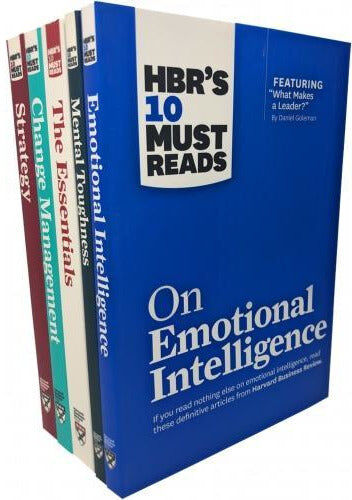
Harvard Business Review Press Harvard Business Review HBR’s 10 Must Reads 5 Book Collection Set – Essential Business, Leadership & Management GuidesHBR's 10 Must Reads 5 Books Collection Set Description On Emotional Intelligence If you read nothing else on emotional intelligence; read these 10 articles by experts in the field. We euro; ve combed through hundreds of articles in the Harvard Business Review archive and selected the most important ones to help you boost your emotional skills euro; and your professional success. Mental Toughness If you read nothing else on mental toughness; read these ten articles by experts in the field. We've combed through hundreds of articles in the Harvard Business Review archive and selected the most important ones to help you build your emotional strength and resilience--and to achieve high performance. The Essentials Change is the one constant in business; and we must adapt or face obsolescence. Yet certain challenges never go away. That's what makes this book 'must read.' These are the 10 seminal articles by management's most influential experts; on topics of perennial concern to ambitious managers and leaders hungry for inspiration--and ready to run with big ideas to accelerate their own and their companies' success. Change Management If you read nothing else on change management; read these 10 articles (featuring 'Leading Change; euro; by John P. Kotter). We've combed through hundreds of Harvard Business Review articles and selected the most important ones to help you spearhead change in your organization. Strategy If you read nothing else on strategy; read these 10 articles (featuring 'What Is Strategy? euro; by Michael E. Porter). We've combed through hundreds of Harvard Business Review articles and selected the most important ones to help you catalyze your organization's strategy development and execution.37,98 £*Shipping: 0,00 £Secure redirect to the provider
-
Uplifted Finds Cartoon Big Eye Hub And High Fidelity Canine Engagement Architecture pinkCommand ultimate petownership confidence with this Cartoon Big Eye Ball Dog Toy, a stabilization solution specifically engineered to act as a comprehensive tool for elite organization and superior technical ergonomics. Built with a robust reinforced...39,97 $*Shipping: 0,00 $Secure redirect to the provider
-
Salon Care Microwavable Heat Processing CapSalon Care Microwavable Heat Processing Cap just needs to be heated in the microwave, no cord, no fuss! The filling is 100% flaxseed and will hold heat for up to 30 minutes. The cap is reusable time and time again. Use with any hair treatment that...21,99 $*Shipping: 0,00 $Secure redirect to the provider
-
What are reactants and products?
Reactants are the starting materials in a chemical reaction that undergo a change to form new substances called products. Reactants are consumed during the reaction, while products are the end result of the reaction. The reactants are typically written on the left side of a chemical equation, while the products are written on the right side. **
-
What are limiting reactants in chemistry?
Limiting reactants, also known as limiting reagents, are the reactants in a chemical reaction that are completely consumed, thus limiting the amount of product that can be formed. In other words, they determine the maximum amount of product that can be produced in a reaction. The concept of limiting reactants is important in stoichiometry, as it helps to determine the theoretical yield of a reaction and identify the excess reactant that will be left over after the reaction is complete. **
-
How do you calculate reactants in chemistry?
To calculate reactants in chemistry, you first need to write a balanced chemical equation for the reaction. Then, determine the molar ratio between the reactants and the product in the balanced equation. Next, calculate the number of moles of the known reactant using its given mass or volume and its molar mass. Finally, use the molar ratio to calculate the number of moles of the other reactant needed for the reaction. **
-
Are only reactants given in redox reactions?
No, redox reactions involve both reactants and products. In a redox reaction, one substance undergoes oxidation (loses electrons) while another undergoes reduction (gains electrons). Therefore, both the reactants and products are involved in the redox process. The reactants are the starting materials that undergo the redox reaction, while the products are the resulting substances after the redox reaction has occurred. **
Similar search terms for Reactants
-
United Charger & Smartwatch Data Cable Replacement Charger & Smartwatch Data Cable ReplacementKeep your Garmin 920XT charger ready whenever adventure calls. Designed for athletes, runners, and fitness enthusiasts, this replacement charger ensures your Forerunner 920XT stays powered and connected. Its durable smartwatch charging cable offers...39,97 $*Shipping: 0,00 $Secure redirect to the provider
-
Oliphant Cloud StorageThe Oliphant Cloud Storage is a cool and quirky way of storing an array of personal items. This space-saving organiser is not only a fun interiors item but it is also highly practical. Perfect for holding your phone, keys, receipts and coins, the product is designed to look like a cloud and features several sections of varying sizes, whilst the hidden compartment that's built into the base is ideal for storing important documents such as your passport or event tickets. Durable wood construction Hidden compartment ideal for important documents Incorporates different sized sections22,49 £*Shipping: 3,50 £Secure redirect to the provider
-
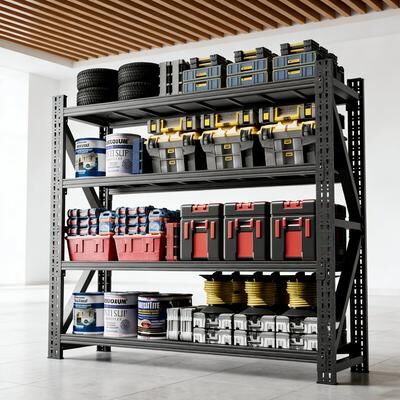
Telepassa Metal Heavy Duty Adjustable Garage Shelves Industrial Storage Unit for Warehouse【Massive Heavy-Duty Construction】: Tackle the heaviest storage challenges with this extra-wide steel storage rack. Formed from heavy-gauge cold-rolled steel with seamless, welded uprights, it delivers extreme stability.351,49 $*Shipping: 0,00 $Secure redirect to the provider
-
Uplifted Finds Cartoon Big Eye Hub And High Fidelity Canine Engagement Architecture blueCommand ultimate petownership confidence with this Cartoon Big Eye Ball Dog Toy, a stabilization solution specifically engineered to act as a comprehensive tool for elite organization and superior technical ergonomics. Built with a robust reinforced...39,97 $*Shipping: 0,00 $Secure redirect to the provider
-
How do you calculate the reactants in chemistry?
To calculate the reactants in a chemical reaction, you first need to write out the balanced chemical equation for the reaction. Then, you can use stoichiometry to calculate the amount of reactants needed based on the desired amount of product. This involves using the coefficients in the balanced equation to set up conversion factors and then using these conversion factors to calculate the amount of reactants required. Finally, you can use the molar mass of the reactants to convert between mass and moles if necessary. **
-
What are the products and what are the reactants?
In a chemical reaction, the reactants are the substances that undergo a chemical change to form new substances called products. Reactants are the starting materials that are transformed into products during the reaction. The products are the end result of the chemical reaction, formed from the rearrangement of atoms in the reactants. The reactants are consumed during the reaction, while the products are the new substances that are produced. **
-
How do you calculate the required amount of reactants?
To calculate the required amount of reactants, you first need to determine the balanced chemical equation for the reaction. Then, you can use stoichiometry to convert the given amount of one reactant to the amount of the other reactant needed for the reaction. This involves using the molar ratios from the balanced equation to convert between moles of the given reactant and moles of the required reactant. Finally, you can use the molar mass of the required reactant to convert from moles to the required amount in grams or other units as needed. **
-
Why do the reactants not disappear in chemical reactions?
The reactants do not disappear in chemical reactions because of the law of conservation of mass, which states that matter cannot be created or destroyed in a chemical reaction. Instead, the reactant molecules are rearranged and their bonds are broken and formed to produce new products. This means that the total mass of the reactants is conserved and is equal to the total mass of the products. Therefore, the reactants do not disappear, but rather undergo a transformation into new substances. **
* All prices are inclusive of VAT and, if applicable, plus shipping costs. The offer information is based on the details provided by the respective shop and is updated through automated processes. Real-time updates do not occur, so deviations can occur in individual cases. ** Note: Parts of this content were created by AI.